
Line of Credit Checklist: Draws, Rates, Repayment
Use this line of credit checklist to compare draw access, variable rates, repayment flow, fees, and secured-versus-unsecured options before you apply.
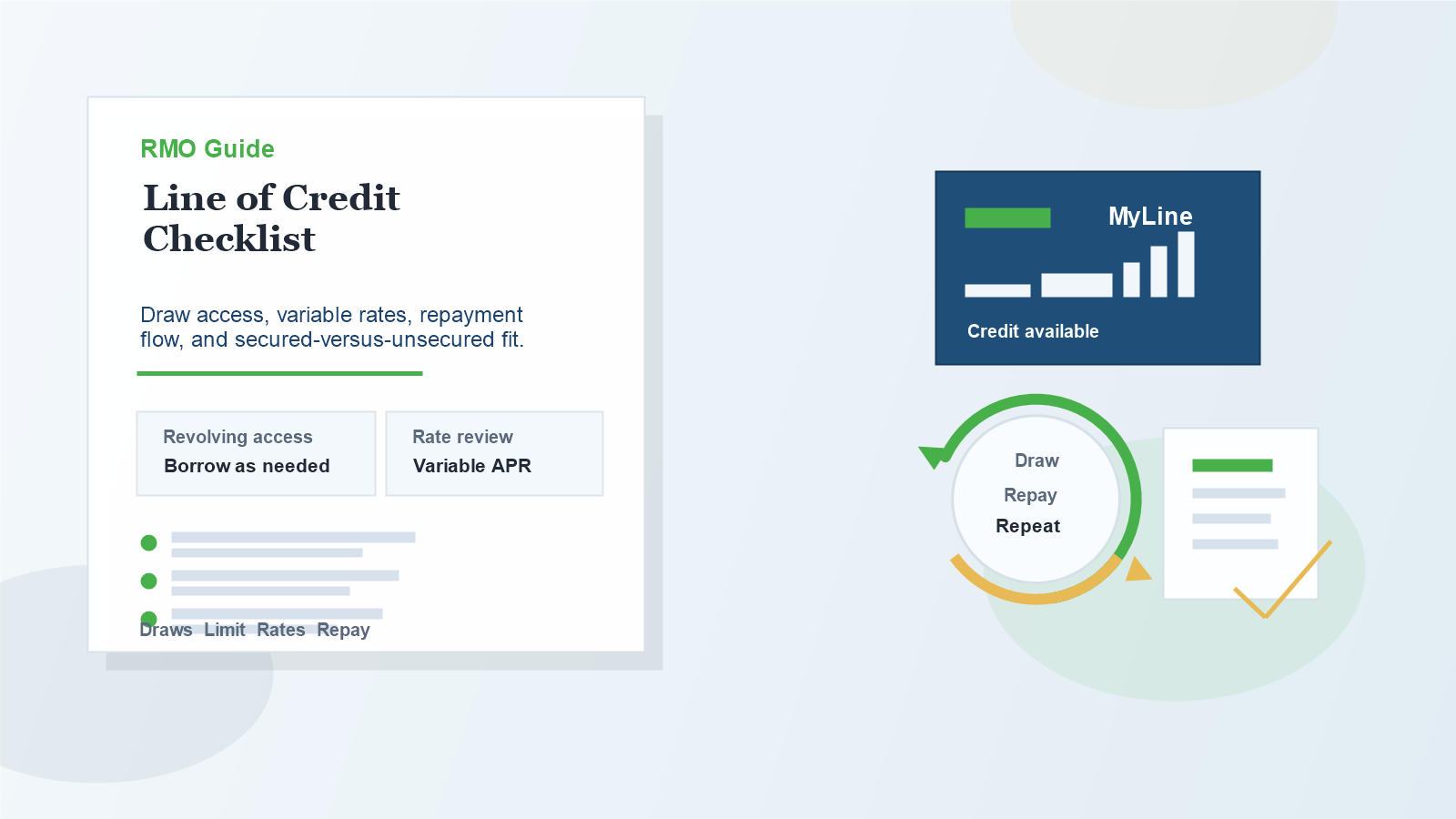
A line of credit is one of those products people usually start researching only when a cash gap is already here. A repair bill lands, income timing gets uneven, or a planned expense turns out to be less predictable than it looked on paper. That is exactly why the comparison deserves a checklist before you apply. The right line of credit is not just available credit. It is a borrowing tool that fits how you expect to draw, repay, and manage the balance over time.
Search results often flatten every line of credit into the same promise: flexible funds when you need them. That is directionally true, but it skips the practical questions that shape the experience once the account is open. Is the line unsecured or backed by savings? How do draws work? What happens to the monthly payment when the balance changes? Does the product live inside the digital banking tools you already use? Those are the questions that belong at the top of the review.
Start With How A Line Of Credit Actually Works
A revolving line of credit is different from a lump-sum loan. Instead of receiving the full amount all at once, you are approved for a credit limit and can draw only what you need, when you need it. Interest applies to the amount you use, not to the total limit. As you repay, available credit is restored for future use.
| Checklist Item | Why It Matters | What To Check |
|---|---|---|
| Draw access | A line is only useful if moving money is straightforward when you need it. | Can you transfer funds through digital banking without extra friction? |
| Rate structure | Lines of credit often use variable rates that can change over time. | Is the APR variable, and what does that mean for future payment cost? |
| Repayment flow | Minimum monthly payments change how long a balance can linger. | How is the payment calculated, and what happens as the balance rises or falls? |
| Fees | Fees can turn a flexible tool into an expensive one. | Are there draw fees, annual fees, or prepayment penalties? |
| Collateral | Secured and unsecured lines solve different borrowing problems. | Would savings-backed access improve rate or limit enough to matter? |
That comparison is more useful than chasing a single number. It shows how the product behaves after approval, which is where most borrowing decisions become either manageable or messy.
Unsecured Versus Secured Should Be A Real Decision
RMO's public line-of-credit content makes this distinction clear. MyLine is positioned as an unsecured personal line of credit, while MyLine Secured is backed by an RMO savings account or CD. That matters because secured structure can change both the available limit and the pricing conversation, but it also changes what you are putting to work as collateral.
The public guidance says MyLine ranges from $2,000 to $25,000, while MyLine Secured can reach up to $50,000. It also states that secured structure may support a lower variable APR because the line is backed by deposits that remain in your account and continue earning interest while securing the line. That is a practical comparison point, not a marketing one. If you already hold savings or a CD at RMO and want borrowing flexibility without liquidating the account, that option belongs on the checklist early.
Digital Draw And Payment Flow Matter More Than People Expect
The convenience promise of a line of credit only holds if access is simple when life gets busy. RMO's public description says draws, payments, and balances can be managed through MyRMO. That is important because a line of credit often becomes relevant during moments when someone does not want to schedule extra paperwork, wait for a branch visit, or solve a transfer problem while the expense is already urgent.
It also changes how you should evaluate the product. Ask whether you can move money directly into checking or savings, whether balances are easy to review in the app, and whether repayment can fit into the same digital routine you already use for transfers, bill pay, or autopay. Those details sound small until the first time you need the line quickly.
Repayment Flexibility Is Helpful Only If You Respect It
A revolving line of credit can be a useful tool for uneven expenses, but flexibility can also hide true borrowing cost if the balance lingers. RMO's public line-of-credit language explains that minimum monthly payments are based on the outstanding balance and that interest accrues daily on the amount drawn. That should shape how you compare the product. A smaller minimum payment may feel easier in the short term, but it can extend the repayment timeline if you never move beyond the minimum.
The better question is not whether flexibility exists. It is whether your plan for using the line is disciplined enough to make the flexibility useful instead of expensive. Many searchers compare a line of credit against emergency savings, a personal loan, or even a credit card. That comparison works best when you are honest about whether the need is temporary, repeating, or part of a bigger budgeting problem that borrowing alone will not fix.
Where RMO Fits
RMO personal lines of credit are positioned for members who want revolving access to funds managed through MyRMO, with both unsecured and savings-backed options available depending on the borrowing need. The strongest fit is for someone who wants flexible draw access, no annual or draw-fee friction in the public product language, and a borrowing tool that integrates with everyday account management rather than sitting off to the side.
Helpful next steps: compare RMO personal line of credit options, review how MyRMO handles transfers and payments, and use the RMO Appointment Center if you want help deciding between MyLine and MyLine Secured.